Ausstellung

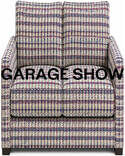
garage show

with works by Igor Blomberg Tranæus, Nanna Kaiser and Patrick Winkler.

03. 07. - 04. 09. 2026

GARAGE SHOW 2026

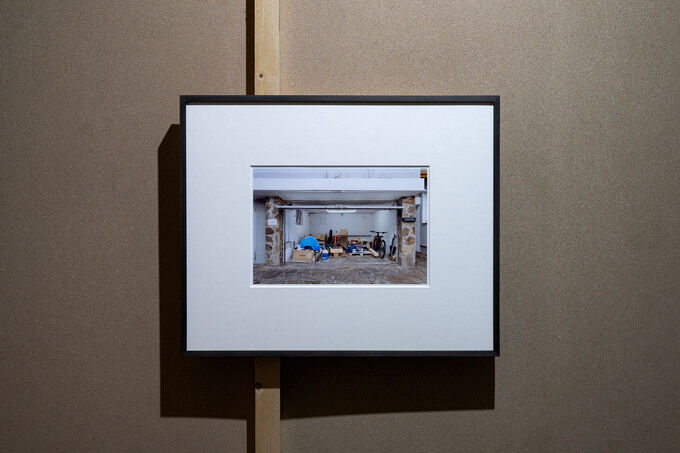
“He’s in the garage,” the mother says of the father, and this means he’s not to be disturbed. What is Daddy doing in that concrete room that smells so strangely sweet, a complex musk of rubber, soil, and dust? There are no windows, the only light source a bulb on a string, unless he heaves open the heavy metal door that exposes him to the street. He is sliding around the underside of the car, covered in grease and cursing. He lifts dumbbells, the veins on his arms bulging. He watches the ball game on the old TV, feet up on the couch with the stuffing coming out. He throws darts. He considers what might be inside the unpacked storage containers. He avoids the disorganization of the power tools. He is scheming the next great invention that will change the world—as Steve Jobs did for computers in his garage in California, or like Harley and Davidson did for motorcycles in theirs. He is a dreamer working in the medium of possibility, and this is his domain.

As a private space adjacent yet separate from the cozy domesticity of the house proper, the garage is historically coded as masculine. Especially in those most ideologically oppressive of societies, such as suburbia in the mid-century United States, the garage is man’s escape from the performance expected of him everywhere else. In American Beauty (1999), Lester Burnham, undergoing a midlife crisis inspired by his wife’s infidelity, transforms his garage into a shrine to counterculture, rolling joints and listening to 70s hits like “All Right Now” by the band quite literally named Free. In the Austrian context, Michael Haneke’s The Seventh Continent (1989) understands the garage to be somewhere an outsider might catch a glimpse of a fucked up family’s private life, before the automatic door quietly lowers itself and shuts, the screen cutting to black.

In 2026, we like to believe that the nuclear family is widely considered a farce, the grip of gender prescription largely rejected. It is not a given that we would relegate wife to the kitchen and husband to the man cave. How many of us even own a home? But there is an ethos intrinsic to the garage that we can and should keep, and that is the sanctity of a place where it’s acceptable to exist unproductively. Of course you say you’re being productive when you sneak out to ride the exercise bike or to tinker with the carburetor of that busted Volkswagen Beetle. In reality, time spent there is not about output. The fixer-upper project is never finished. The garage offers the privilege of working on something perpetually in progress, destined to never leave the garage at all. Pure pleasure keeps it there, contained.

Such an engagement with art-making does exist, and a good example is the activities of a collective known as Garage Show. Since 2023, three artists have created the conditions to prioritize process over product, inviting the rest of us to step into the mess.

Stefan Pfattner, Magdalena Stückler, and Bartholomaeus Wächter met while working as dressers for opera singers at Salzburger Festspiele. For 60 to 70 hours a week, two months out of the year, they organize costumes in the wardrobe closet and help performers in and out of elaborate suits and gowns. Yet even on the brink of physical and mental exhaustion, a desire to keep up their own art practices persists. It is not a unique urge. It is in fact very human: the want, or for some the need, to create that which makes no money but that we devote ourselves to at midnight, after getting home from the money-making job. And then there’s the want (it’s never a need) to show it to other people. Schmoozing with gallerists may not be an option, but a detached garage at the edge of the city will do just fine.

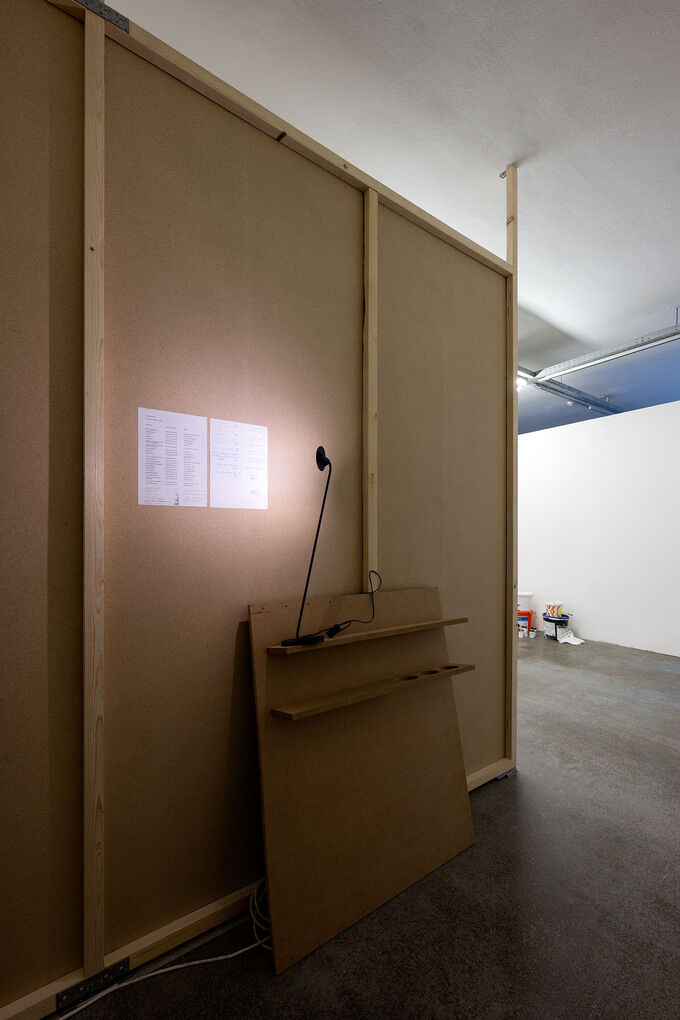
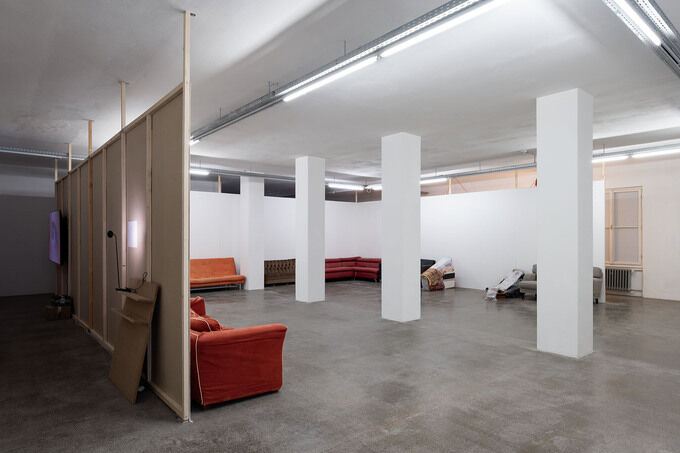
Last August, Garage Show secured a couple nights off from work to host two film screenings. The selected shorts ran the gamut of the computer-generated and the cellphone-shot, the autobiographical and the surreal. They were only one element of CINEMA. Also crucial was the architectural invention of a flatscreen TV mounted onto wood and affixed to a metal pole—revealing, upon rotation, a bar setup on the other side, that resembled a modernist vitrine, with four simple shelves that hold cocktail shakers, liters of batched drinks the color of amber, and a variety of mismatched, delicate glasses. Important too was the smell of the garage at intermission, the crowd sloshing amaretto sours and passing cigarettes. And so were the sounds of chairs we dragged across the floor in order to squeeze under the roof pummeled by a dramatic downpour at summer’s end.

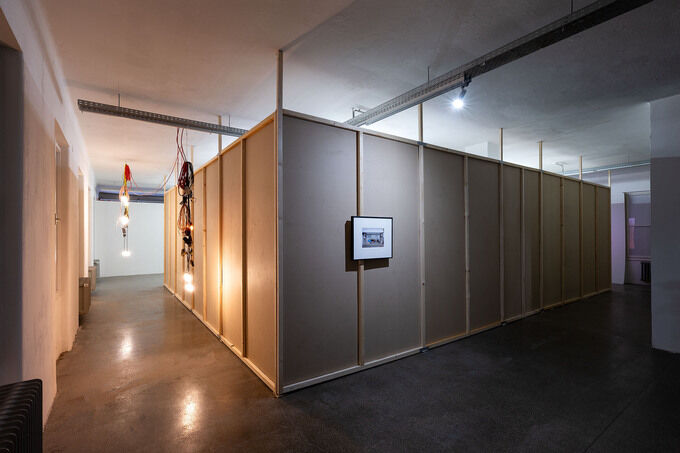
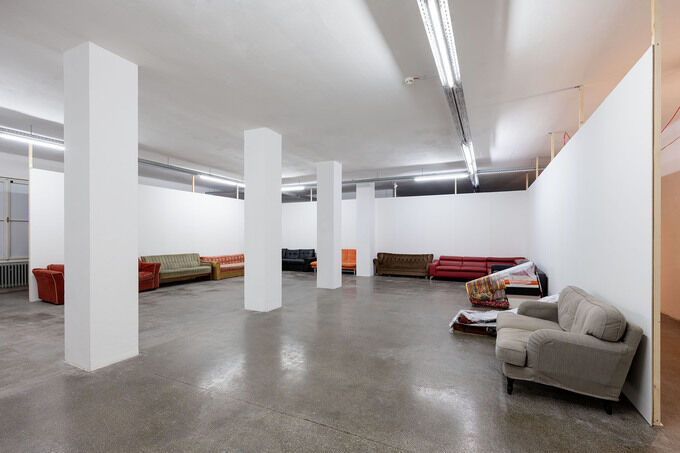
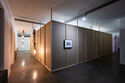
The center of narrative, according to Russian literary theorist Mikhail Bakhtin, is the chronotope: the point where time meets space. Together with the binding glue of possibility, time and space are Garage Show’s primary mediums, used to construct a piece that hovers between professional presentation and casual hang. This year, Garage Show rebuilds their space inside of the literal and symbolic white cube that is fünfzigzwanzig, becoming a parasite that has burrowed inside the body of the established institution. Meanwhile, the “actual” or original garage is open once a week as the slick operation Gallery Bar, a polished playground for the imagined millionaire collector, where drawings can be purchased out of that delightful vitrine, and custom bar carts by artist Lisa Sifkovits hold menus of artistic texts.

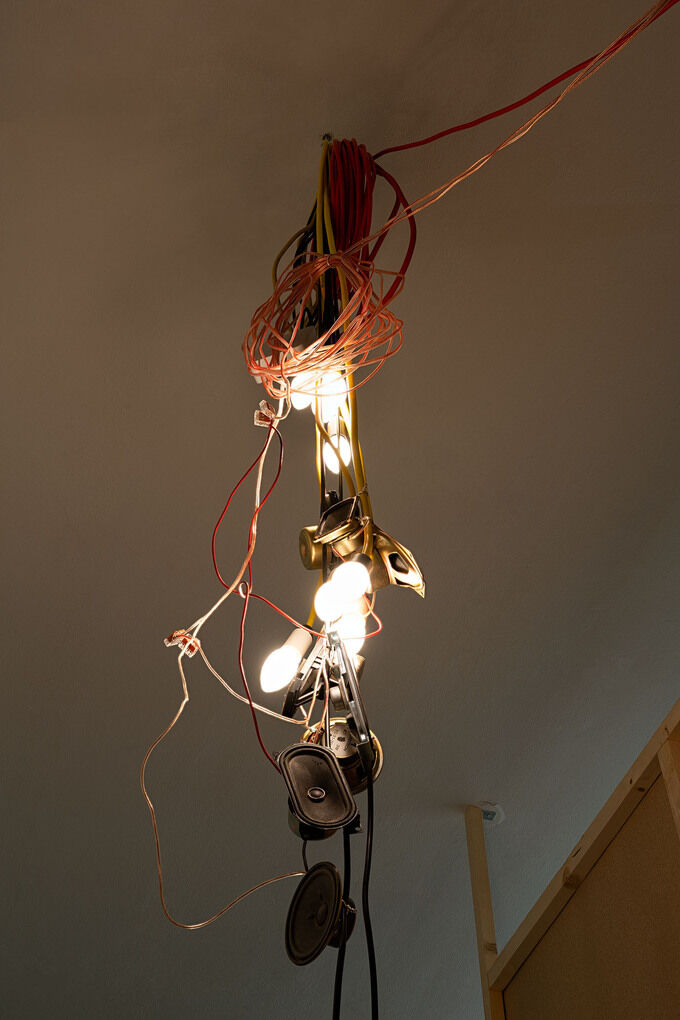
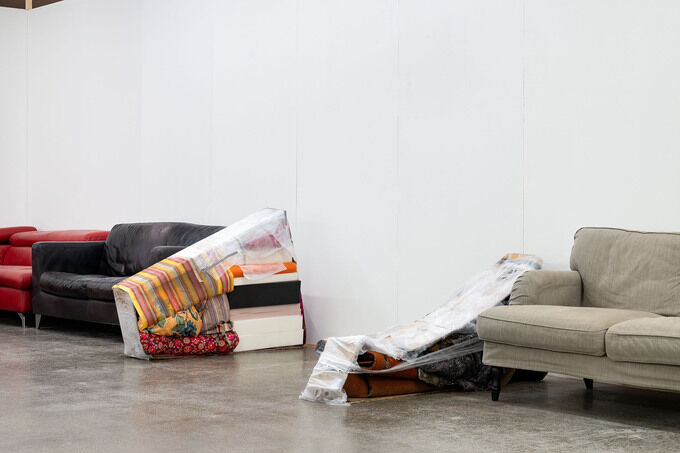
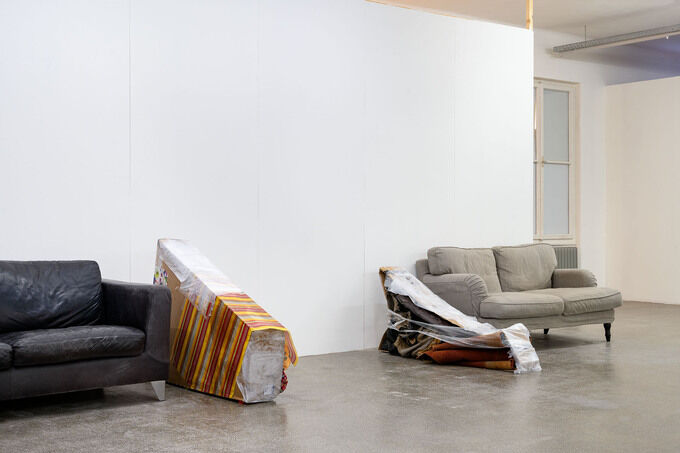
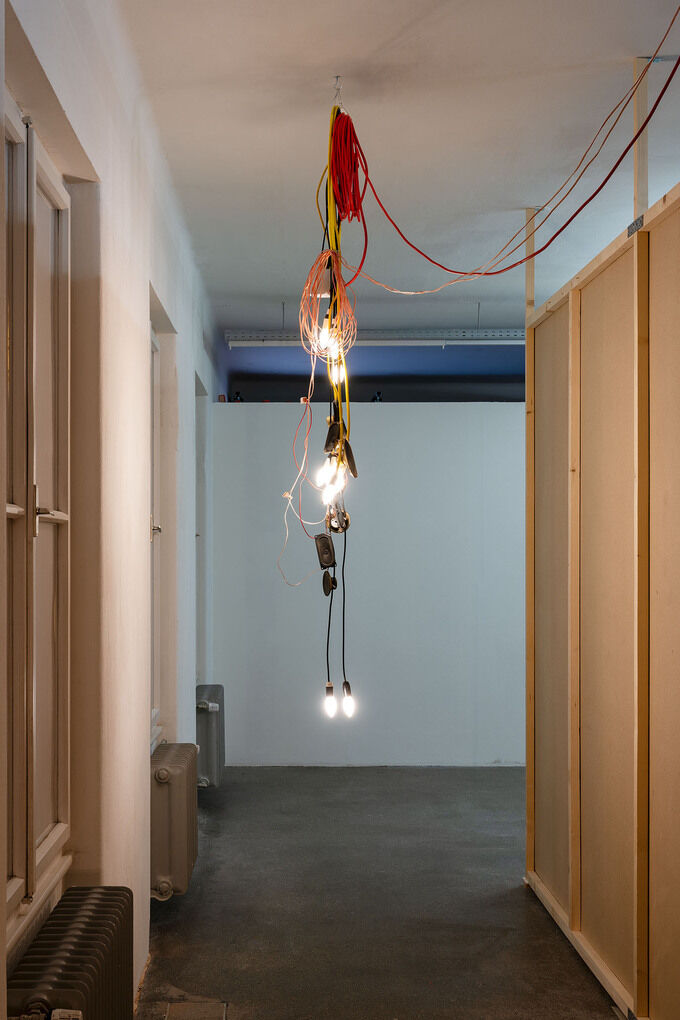
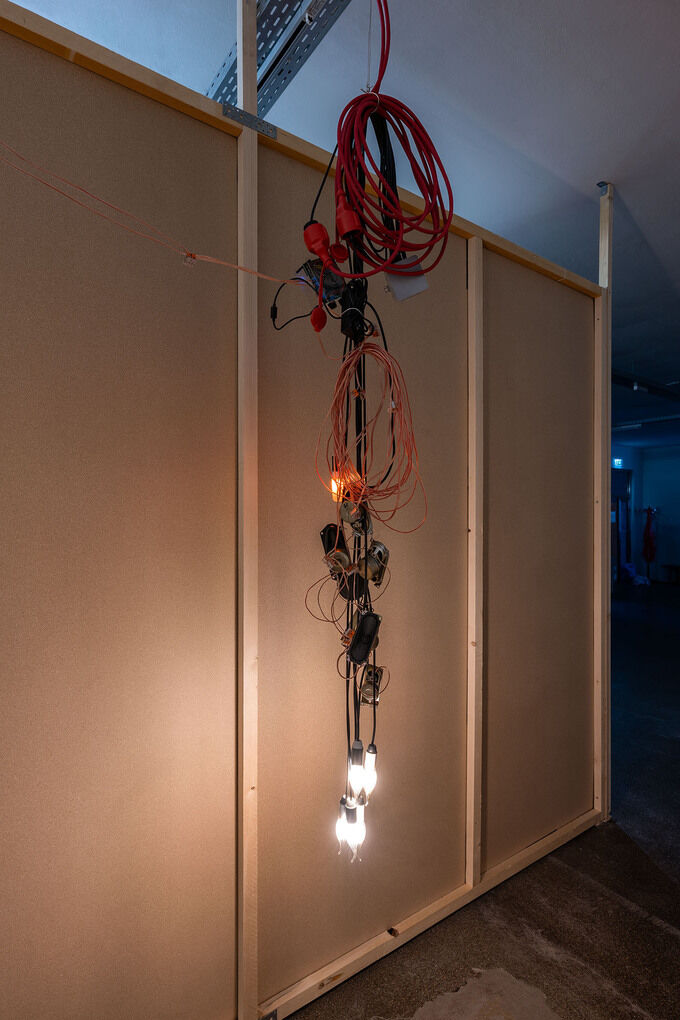
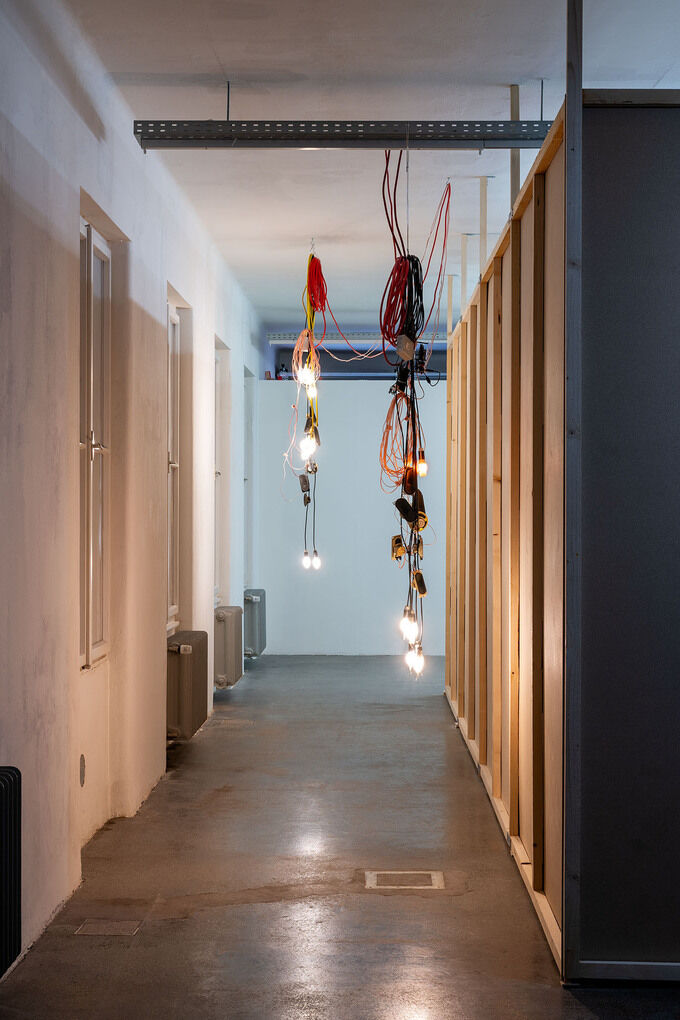
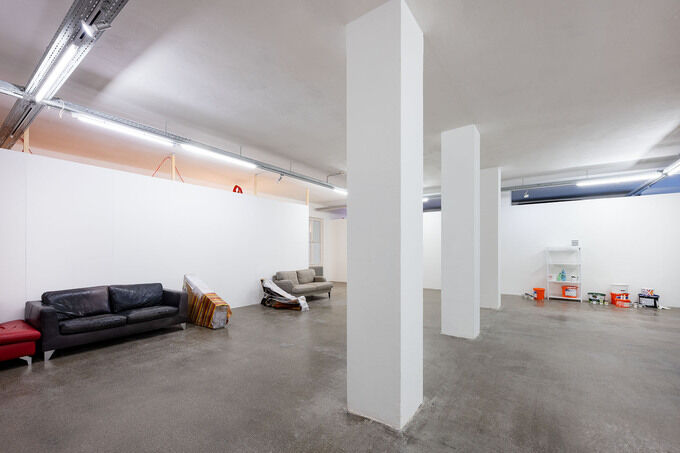
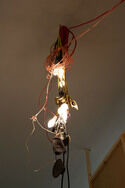
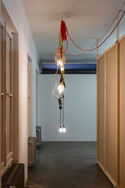
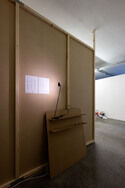
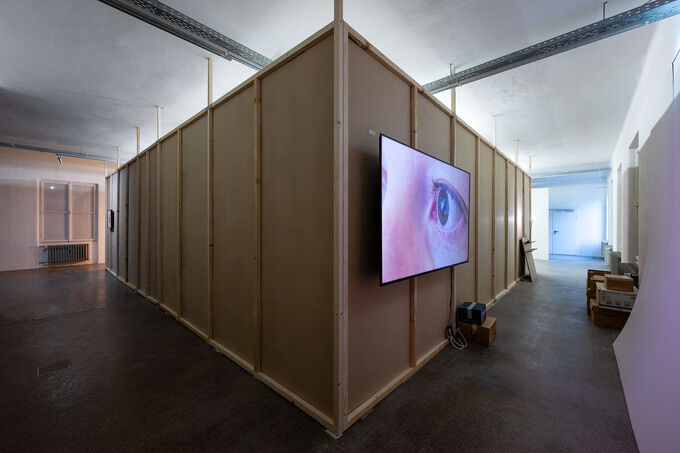
At both locations, Garage Show confounds, switching the expectations of time and space around and back and over again. At both, one must approach the art via alleyway, turning a corner to find a glowing screen of moving images and an empty seat to stop and watch. At fünfzigzwanzig, lamps by Igor Blomberg Tranæus provide a source of light to guide a path into the room within the room, where a dozen or so couches—more than are necessary, and more comfortable than the usual cold bench plopped in front of a museum’s most famous Rothko—are arranged. It must be noted, again, that the sitting is the work. There may be video playing but it is decontextualized. Its content is not the point; our presence is.

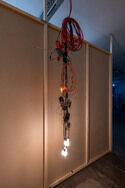
Igor Blomberg Tranæus is one of three selected artists, alongside Nanna Kaiser and Patrick Winkler, who embody the philosophy of method made visible, their practices emphasizing duration, embodied experience, and a certain kind of scrappiness essential to survive as a contemporary artist who is not a Habsburg descendant. Blomberg Tranæus’s lamps marry an industrial aesthetic and handicraft, their tangle of wires and cables evocative of a studio film set—the backstage chaos necessary to make something cohesive come out the other side. His lamps feature a built-in sound system, easing visitors into an auditory landscape before they encounter any image, reminiscent of the echoes of laughter and applause that help curious people locate the entrance of the real garage from the street.

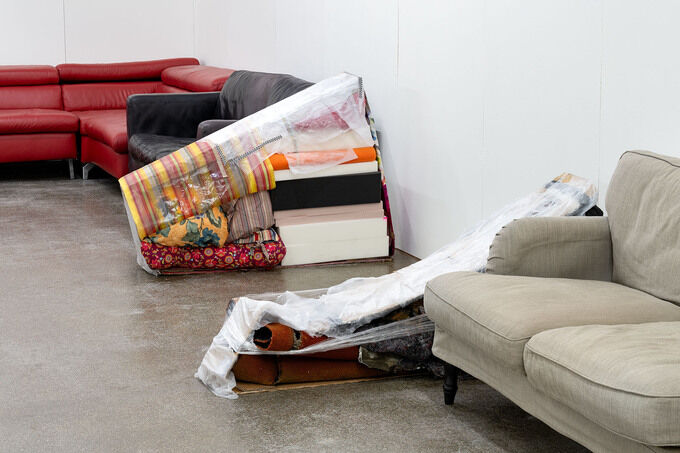
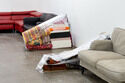
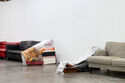
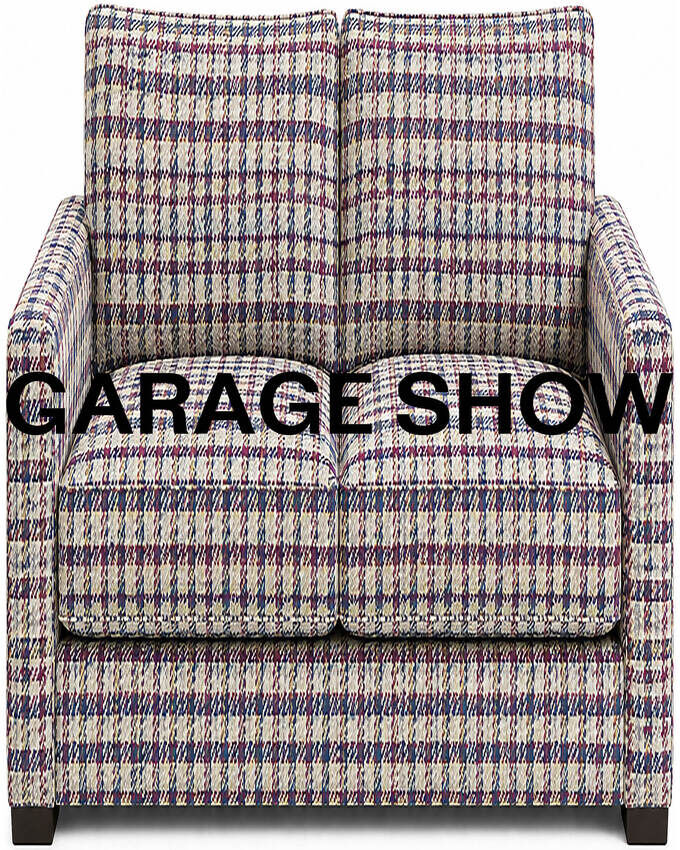
Nanna Kaiser knows garages intimately thanks to her father’s work as a truck mechanic. These particular sculptures, however, are made from a cast of her grandmother’s sofa. Kaiser’s intimate seating arrangement—alternately soft and squishy, or metallic and hard—might lead some passing critics to diagnose her with an automobile fetish. Think Cronenberg’s Crash (1996) or Julia Ducournau’s body horror Titane (2021), in which a Cadillac impregnates a serial killer. But Kaiser’s interest is less erotic than it is elegiac, concerned with the limits of the body and mind, reminding us of their eventual exhaustion. From within Kaiser’s sofa a filmic projection plays. A whisper of light, the addition evokes a tongue-in-cheek video-art practice that takes the form of documenting, say, the state of her sink of dirty dishes. “Art and life are not separate from each other,” Kaiser says. “I have no money to rent a studio, so I say, ‘I do not need one.’ I work with the things that surround me.” For those lucky enough to have a garage in their life, the primary function tends to be storage. It is a place to put the excess that surrounds us: the Christmas decorations, the camping gear, the outgrown clothes. It is a luxury we have become entitled to, to own more items than we have room for. Does it make us happier, all this stuff?

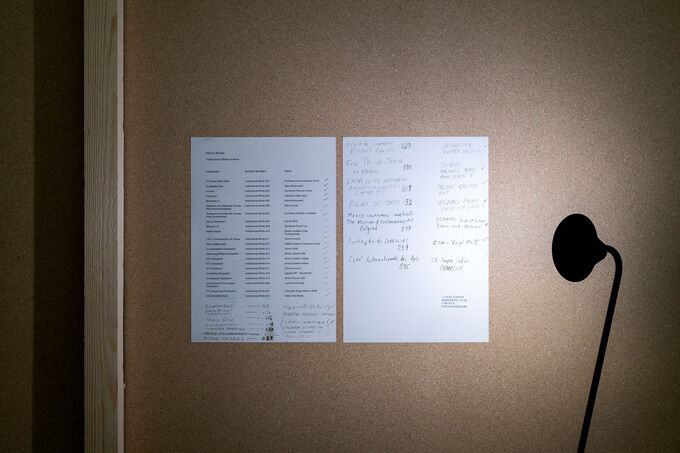
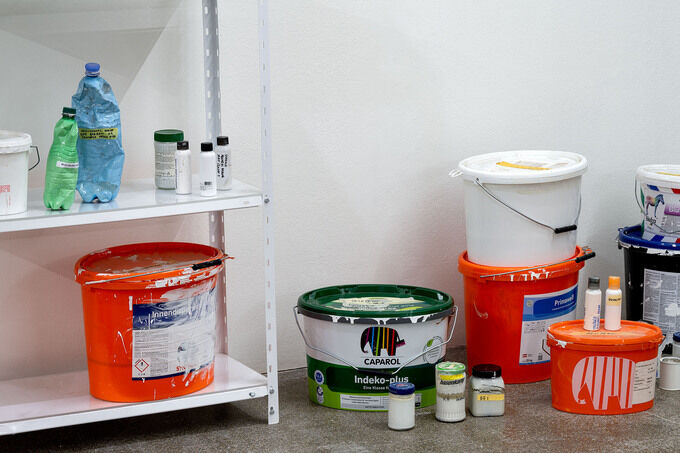
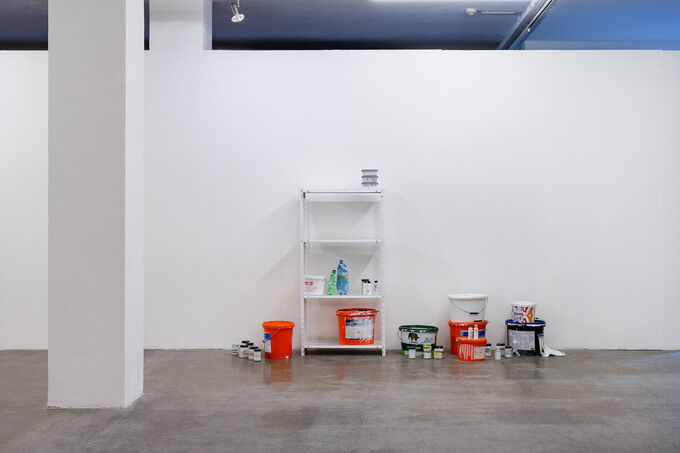
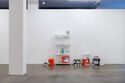
Potential materials are often right in front of our faces. Patrick Winkler’s contribution may at first seem like something the fünfzigzwanzig team forgot to remove during installation. Lining an industrial shelf are metal buckets, crushed plastic bottles, and other containers labeled with masking tape. Look closer and notice familiar names: Kunsthalle Zurich, Neue Galerie Graz, Palais de Tokyo. Within these receptacles, Winkler has collected samples of the white paint used for the gallery walls in more than 30 institutions across Europe, obtained by cornering curators in the elevator or at a museum’s backdoor. Joined by a precise cataloguing system Winkler devised, the work exposes the hidden labor that goes into the display of art—he started art handling for Fotogalerie Wien to help sustain himself financially while a student at the Academy of Fine Arts—and points out the humor in trying to gatekeep what happens behind the scenes of these oh so hallowed spaces.

Just as Winkler implicates his own archive, the Garage Show collective has mined the archives of fünfzigzwanzig as part of their parasitic intervention. They dusted off old DVDs, a format in danger of obsolescence, unearthing videos that might have been tossed without being played again, had the curators not believed in the minor, the unseen, the unfinished.

The garage is never empty, the way the unconscious is never cleared. At random, an object or a moment wrests a memory loose and brings it to the fore. The hammer and the nails, the broken skis, the firewood. When Dad disappears behind that heavy door, grabs a beer from the mini fridge, and disassociates until dinner time—turning the nail over in his hands, pressing the point into his skin—he joins the pantheon of artists who make their best work in a space not meant for anyone else to see. Garage Show allows us just a peek.

Text by Greta Rainbow


Friday, 03.07.2026, 7pm
Opening "Garage Sow" at Fünfzigzwanzig with Igor Blomberg Tranæus, Nanna Kaiser and Patrick Winkler
DJ set by little star and Rosina

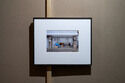
Garage Show is an exhibition format by the artists Stefan Pfattner, Magdalena Stückler, and Bartholomaeus Wächter. For the exhibition at fünfzigzwanzig, the artists have inserted a scaled-up version of the garage space they have repeatedly used for shows into the institution.

Saturday, 04.07.26, 4pm
Opening “Gallery Bar” at Nonntaler Hauptstrasse 84, 5020 Salzburg

Additionally the “Gallery Bar” will be open on:
Saturday, 11.07.26, 6–10pm
Saturday, 24.07.26, 6–10pm

Gallery Bar is an exhibition organized by Garage Show. The garage in Nonntal will be temporarily transformed into a hybrid between gallery and bar, where works on paper are embedded within the bar counter. The show/bar will be open five times throughout July and early August. All exhibited works are available for purchase. For further information and opening hours visit garageshow.info

With works by Costanza Brandizzi, Shawna Christen, Dune Crawshaw, Daniel Fonatti, Kurt Fritsche, Olga Mathilde Gärtner, Tomas Loureiro Goncalo, Leo Hasslinger, Bianca Hateganu Kerschner, Anna Hostek, Maria Hummer, Rafael Jörger, Maureen Kaegi, Se- bastian Koeck, Sophia Mairer, Florian Mayr, Kofi Møller, Stefan Pfattner, Greta Rainbow, Ludovico Scalmani, Lisa Sifkovits, Nana Sorgo, Lucy Steppa, Magdalena Stückler, Igor Blomberg Tranæus, Jakob Urban, Juan Francisco Vera, Bartholomaeus Wächter, Marcus Wagner and Janina Weißengruber.